



what makes a restaurant feel like yours.
Most beautiful rooms are not built to a brief. They are built to a feeling. What we have learned about how that feeling gets made.
insights · space · 13 oct 2026 · 7 min
Before a guest reads the menu, they have already read the room. Light sets the price expectation, the volume, and the length of the visit, and it does it in about four seconds.
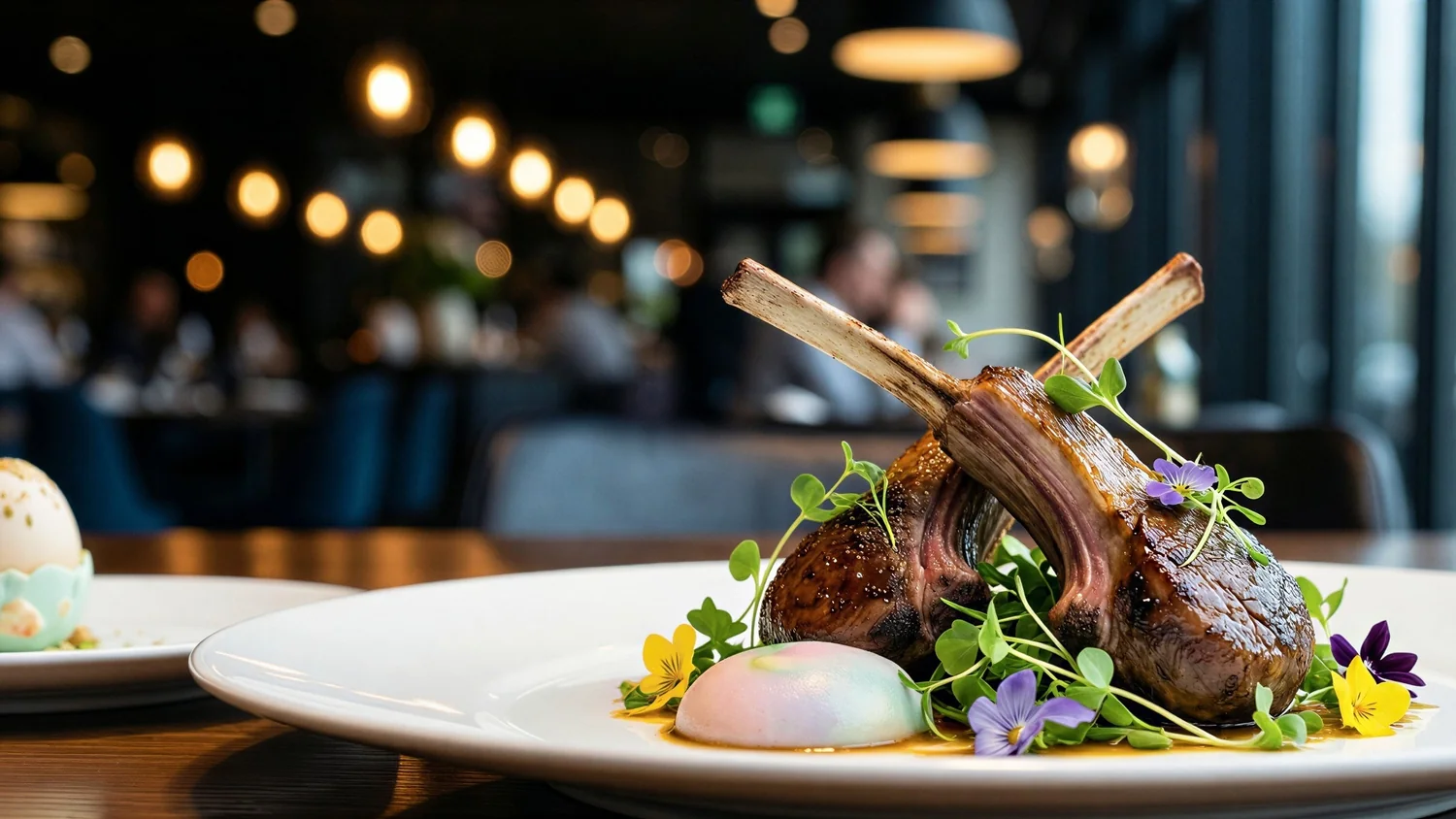
Restaurant lighting tells guests how to behave. Bright and even says fast, casual, cheap, eat and go. Low and pooled says slow down, order another round, this costs more. Color temperature tells them whether the food looks like food. Contrast tells them where to look. None of this is conscious. All of it lands in the first few seconds, before a menu is open or a server says a word.
So when a room feels off, light is usually the thing nobody names. The finishes are right. The furniture is right. The guest still leaves after one drink and can't say why.
A guest steps through the door and runs a fast read. How loud is it. How long should I stay. What am I about to spend. Light answers all three before anything else does.
Even overhead light across every surface reads as a place built for turnover. Cafeteria, airport, fast casual. That is not an insult, it is a signal, and if you run a counter concept with a five dollar coffee and a twelve minute average visit, that signal is correct and you should lean into it. The problem starts when a chef-driven room with a $38 entree is lit the same way. The light says one price and the plate says another. Guests resolve the conflict in favor of the light, every time, and they feel overcharged.
Pooled light does the opposite. Bright where the food is, dark where it isn't, and the room shrinks around each table. Guests lower their voices. They stay longer. The third drink gets ordered. We have watched the same room, same menu, same staff, run a different check average after the circuits got zoned and dimmed properly.
Kelvin is the number on the box and it decides whether your plates look appetizing or clinical. Warm light in the 2200K to 2700K range flatters skin, crusty bread, browned meat, amber liquid in a glass. Push up to 4000K and the same plate goes flat and blue-gray. Push to 5000K and you have a convenience store.
Here is the part that gets missed: the bulb's color temperature has to agree with your finishes. Warm light on cool gray tile and white quartz reads sickly, like a hospital somebody tried to make cozy. The same warm light on walnut, brass, and oxblood leather reads like money. Light and material are one decision, not two, which is why we pick lamps while the finish board is still on the desk.
Then there is color rendering, the number on the spec sheet nobody asks about. Cheap fixtures rated around 80 flatten everything. A citrus garnish goes dull, a medium-rare steak loses its red, a saffron rice looks like plain rice. Specify 90 or above over the pass, over the plates, over the bar. Your cooks are plating for a color they can see and your guests are seeing something else.
Most rooms get lit for a photograph. One setting, one hour, usually golden hour with the patio doors open and two people at the bar. Then service happens.
A dining room at 11 AM with sun pouring through the front glass is a completely different optical problem than the same room at 9 PM on a Saturday with every four-top seated. If the fixtures are on one switch, one of those two services is wrong, and usually both are. Lunch feels gloomy because the pendants are fighting daylight. Dinner feels harsh because the same output that read as subtle at noon is now the brightest thing in the room.
Zoning fixes it. Separate dimmable circuits for the bar, the dining room, the patio, the entry, the back wall. Build three or four scenes into the control panel and put them on a schedule so the shift lead taps a button instead of guessing. We also light the back of house like it matters, because it does. Cooks at the pass need clean, cool light with honest color rendering to judge doneness and plate color. The dining room needs the opposite. Those should never share a circuit, and if your electrician hasn't been told that by the time rough-in starts, it isn't getting fixed cheaply later. We cover the broader version of this in five restaurant interior design mistakes that cost money.
Most operators assume the fix means ripping out ceilings. It usually doesn't. Start with lamps. Swapping every bulb in the house to a consistent 2700K with honest color rendering costs less than a weekend of comped desserts and changes the room overnight. Mixed color temperatures are the single most common problem we walk into. Somebody replaced three burnt-out bulbs with whatever was in the storeroom, and now the room has a warm half and a cold half, and nobody on staff has noticed because it happened one bulb at a time.
Second, aim what you already have. Track heads get knocked out of position by ladders and cleaning crews. Walk the room at service light levels with the menu in your hand and see where the light is actually falling. If it is landing on the floor between tables instead of on the tables, that is a free fix that takes twenty minutes.
Third, add light where guests transact. The host stand. The menu at the table. The bottom of the stairs. The spot where the card reader comes out. Guests forgive a dark room. They do not forgive squinting at a check. A small fixture over each of those points buys more goodwill than another statement pendant.
Fourth, add dimmers before you add fixtures. Half the rooms we walk into have the right lamps installed at the wrong output with no way to change it. Dimming is the cheapest control you will ever buy.
Run the math on a 90-seat neighborhood bistro. The room is lit flat and bright. Guests finish, look up, and the room tells them it's time to go. Average visit runs 58 minutes instead of 75. Nobody orders the second glass of wine, the one that would have left about $9 after pour cost. Across forty tables on a Saturday, that is $360 of margin walking out the door because the light said hurry.
Now run it the other way. A room lit too dark in the wrong places. Servers misread hand signals across the floor. A runner puts a plate at the wrong seat. A guest holds a phone flashlight over the menu and orders the thing they can read instead of the thing with the best margin. Bad light is an operations problem wearing a design costume.
This is the part of the work we treat as structural rather than decorative. Light gets planned alongside the layout, the service path, and the menu, not chosen from a catalog at the end. If you want the full picture of how that gets handled, our commercial interior design work starts with how service moves and lights to match.
Layers, not a layer. Ambient light sets the floor. Task light lands on tables, the bar top, the pass, the host stand. Accent light picks out the tap wall, the art, the bottle display, the thing you want photographed. Decorative fixtures are jewelry and they are the last thing chosen, not the first.
Contrast is the tool nobody uses enough. A room where everything is equally lit has nowhere for the eye to rest. Let the walls fall off. Let the corners get dim. Put the brightest thing in the room on the plate and the second brightest on the face of the person across the table. Everything else can recede.
And light the exterior. A warm, well-lit patio and a readable sign at dusk do more for walk-in traffic than most of what gets spent on ads that month. Guests choose a room from the sidewalk, in the dark, in about two seconds. Give them something to choose.
For most dining rooms and bars, 2700K is the safe target, with 2200K working well for late-night or heavily moody rooms. Keep it consistent across the whole guest-facing space. Back of house is the exception, where cooks need cooler, brighter light at the pass to judge color and doneness.
Almost always color rendering, not brightness. Cheap fixtures flatten reds and greens, so a seared steak or a citrus garnish photographs dull no matter what the kitchen did. Swap to lamps rated 90 or above for color rendering over tables and the pass. It is a bulb change, not a renovation.
Usually yes. Lamp swaps, re-aiming track heads, and adding dimmers can all happen between services or on a dark day. What requires real downtime is moving fixtures or adding circuits, which is why zoning gets decided during build-out rather than after.
Three or four is plenty for most rooms. A daytime setting that competes with the front glass, an early-evening transition, a dinner service level, and a close-out bright setting for cleaning. Put them on a timer so the setting does not depend on who is holding the keys.