



restaurant name ideas: a framework that survives opening week.
A working framework for restaurant name ideas: how to test a name against the sign, the phone, the search bar, and a busy Saturday night.
insights · brand · 08 nov 2026 · 7 min
Most plans are written to impress a lender and then never opened again. The useful version is shorter, meaner with numbers, and gets read during build-out.
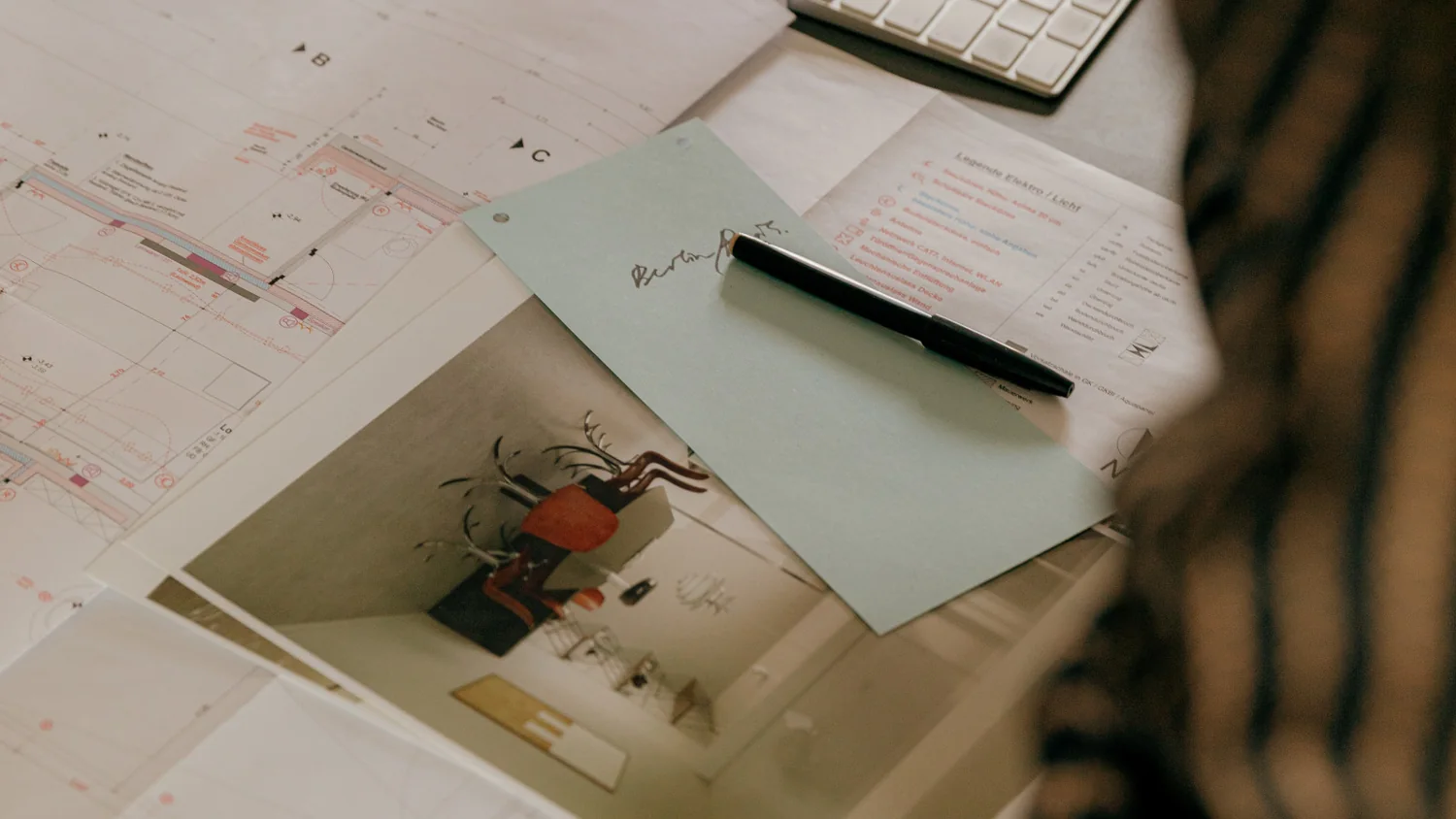
A restaurant business plan that doesn't suck is a decision document, not a sales document. It names the guest, the menu, the room, the hours, the staffing, and the money, in enough detail that someone could build the place from it. Everything that doesn't change a decision comes out. If a page can be deleted without anyone noticing, delete it.
The test is simple. Six months into build-out, when the GC asks whether you need a second hand sink and the landlord wants your sign drawings, does the plan answer? Most plans don't. They answer a question a bank asked once and then sit in a folder. We write plans that get opened on a dusty jobsite with a pencil in the margin.
It has two readers and they want different things. A lender or an investor wants to know whether the money comes back. You want to know what to build, what to cook, and who to hire. One document can serve both, but only if you write the operating version first and format it for the money second. Do it the other way and you get a glossy deck with a market overview and no station plan.
The operating version forces decisions early, when changing your mind is free. How many seats. How many covers at each turn. Whether the kitchen has a fryer, because a fryer means hood tonnage, make-up air, grease interceptor, and a different equipment budget. Whether you serve lunch, because lunch means a second prep window and a different labor line. Each of those is cheap on paper and expensive in drywall.
The money version is the same facts in a different order, with the sensitivity cases on top. We have watched operators spend four weeks on a competitive landscape section nobody read and four hours on the staffing model that determined whether the place survived its first quarter. Invert that.
Most concept sections are adjectives. Warm. Approachable. Produce-driven. None of that tells anyone what to build. Write the concept as a set of constraints instead: who walks in, what they order, what they pay, how long they stay, and what the room has to do to make that true.
Try it as a sentence with numbers in it. A 74-seat neighborhood spot with a 16-seat bar, twelve plates and six cocktails, average check around $38, two turns at dinner, dark one day a week. That sentence sets the kitchen size, the glass order, the POS screen layout, and the number of servers on at 7 PM. The adjective version sets nothing.
Name what you are not, too. Not a late-night bar. No brunch. No private dining room. The things you refuse are what keep a concept from drifting into a menu with 42 items and a kitchen that can't execute any of them well. A plan that only says yes isn't a plan.
This is also where the brand gets decided, whether you admit it or not. The name, the feel at the door, the way the menu reads. Those come out of the same constraints, which is why your restaurant brand identity is a system, not a logo and why it belongs in the plan rather than in a folder you open after the lease is signed.
Build the revenue line from the bottom. Seats times turns times average check times days open. Not a market size figure, not a percentage of some neighborhood's spending. Seats, turns, check. If you can't defend each of the three in one sentence, the forecast is decoration.
Then price the plate, not the category. Take one dish. A $17 chicken sandwich with $5.10 in food cost leaves $11.90 toward everything else. Run that for the ten items you expect to sell most and you learn more about your P&L than any ratio will tell you. Do the same for a pour. A cocktail at $14 with $3.20 in liquor, juice, and garnish behaves very differently from a draft beer at $7 with $1.60 in it, and your mix between them is a decision, not an outcome.
Labor gets its own page and it gets written as a schedule, not a percentage. Write the actual shifts for a slow midweek service and for your heaviest night. Two servers or three. Whether the kitchen runs with a dishwasher after 9 PM. Add them up and you have a labor number that a manager can actually hit, because it was built the way a manager builds one.
Then write the downside. Half the covers you planned. Opening pushed eight weeks because the hood took eight weeks. Rent and insurance and the loan payment keep arriving either way. The plan that survives is the one where you already know which line you cut first and how many months of payroll sit in the account before you have to.
Build-out assumptions. Write down what you are assuming about the space: existing grease interceptor, usable hood, electrical service, ADA restrooms, a usable patio. Each assumption that turns out false is a line item and a delay. Putting them in writing means the landlord conversation happens before the lease, not after.
Opening sequence. Hiring, training, menu testing, soft opens, licensing. In Texas that includes TABC for anyone touching alcohol, and it includes health department timing that doesn't care about your announced date. We keep a working version of the restaurant soft opening checklist in the plan itself so the first week is rehearsed rather than improvised.
Systems. Which POS, who writes the prep lists, how inventory gets counted, who opens and who closes, what gets logged. This is the part owners defer because it feels like something to figure out later. Later is opening week, when you are also short a line cook and the walk-in is at 42 degrees. Decide now, on paper, in the quiet.
Marketing after the doors open. Not a launch plan, an ongoing one. Who takes the photos, who answers the Google reviews, what goes out when the fall menu changes. Six weeks of excitement is not a plan for month seven.
Length is not the measure. A tight 18 pages with real numbers beats 60 with a market analysis section lifted from a template. Cut the industry overview. Cut the paragraph about how dining habits are changing. Anyone evaluating you already knows the business; what they don't know is whether you do.
Write it so a stranger could run the place for a week. That's the bar. If your plan can't tell a competent manager what time prep starts, which vendor delivers Thursday, and what the room is supposed to feel like at 9 PM, it isn't finished. The best plans read like a well-kept ops manual with a forecast stapled to the front.
Then keep it alive. Open it when the equipment quote comes back high. Open it when the GC proposes moving the bar four feet. A restaurant business plan is only useful if it argues back, and it can only argue back if the assumptions are written down where you can check them against what the contractor just said.
We work on this inside Strategy, usually before anyone draws a wall. Concept definition, menu architecture, the model, the opening sequence. It is the cheapest hour on the project and it decides most of the expensive ones.
Long enough to make every decision and no longer. For most independent projects that lands somewhere between 15 and 30 pages, with the financial model in a separate spreadsheet. Length comes from the operating detail, not from the market research. If you added pages to look serious, cut them.
Yes, and arguably more. Without outside money, nobody else is forcing you to defend your assumptions. The plan is where you catch the fryer you can't vent and the labor schedule you can't afford, while fixing it still costs nothing but an afternoon.
Starting from a target instead of from seats. People decide they need a certain revenue and work backward to a check average that the room can't produce. Build from seats, turns, and check, then price your ten highest-selling items plate by plate. Write the downside case in the same detail as the base case.
It should include the decisions that design depends on: seat count, service model, kitchen equipment, hours, average check, who the guest is. Those constraints drive the layout and the brand. Writing them down first means the designer and the GC are solving the right problem instead of guessing at it.